Table Of Content
- Introduction
- What Is Spinal Decompression Therapy?
- How Does Spinal Decompression Work?
- Conditions That May Benefit
- What Is the Success Rate of Spinal Decompression Therapy?
- Is It Good to Decompress Your Spine?
- What Are the Negative Effects of Spinal Decompression?
- Do Doctors Recommend Spinal Decompression?
- Spinal Decompression Therapy vs. Surgery
- Does Spinal Decompression Work Long-Term?
- Frequently Asked Questions
Chronic back pain can make everyday tasks feel exhausting. If you’ve tried medication, rest, or physical therapy without lasting relief, you may have heard about spinal decompression therapy. Naturally, the first question most people ask is: Does spinal decompression work?
For many patients dealing with disc-related back pain, spinal decompression offers a non-surgical option that may reduce pressure on irritated nerves. However, results depend on proper diagnosis, treatment consistency, and overall spinal health.
If you are searching for a chiropractor in Jackson, MI, or looking into spinal decompression options locally, this guide will help you understand what to expect.
What Is Spinal Decompression Therapy?
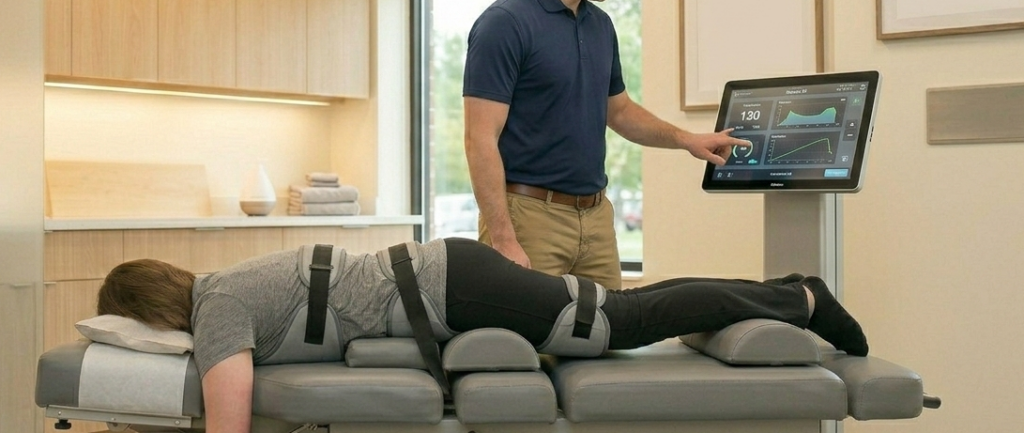
Spinal decompression therapy is a non-invasive treatment designed to relieve pressure within spinal discs. It uses a motorized spinal decompression machine connected to a specialized spinal decompression table. The table gently stretches the spine in controlled cycles.
The goal of spinal decompression therapy is to:
- Reduce pressure inside damaged discs
- Improve circulation to injured areas
- Relieve nerve compression
- Support the body’s natural healing process
Unlike basic stretching, the spinal decompression machine applies calculated traction tailored to your body weight and condition.
How Does Spinal Decompression Work?
To answer the question, does spinal decompression work, it’s important to understand the source of most disc-related pain.
Between each vertebra is a disc that cushions movement. When a disc bulges or herniates, it can press against nearby nerves. This pressure often leads to:
- Lower back pain
- Sciatica
- Tingling or numbness
- Muscle weakness
During spinal decompression therapy, you lie comfortably on a spinal decompression table while a harness stabilizes your body. The machine then stretches and relaxes your spine in repeated intervals.
This controlled stretching creates negative pressure inside the disc, which may help reduce bulging and relieve nerve irritation.
So, does spinal decompression work? For patients with confirmed disc compression, many experience noticeable improvement over time.
Conditions That May Benefit
Spinal decompression therapy is commonly recommended for:
- Herniated discs
- Bulging discs
- Degenerative disc disease
- Sciatica
- Chronic lower back pain
Many providers also suggest spinal decompression exercises to strengthen core muscles and improve long-term stability.
If you are searching online for spinal decompression near me, make sure the provider performs a detailed evaluation before beginning treatment.
What Is the Success Rate of Spinal Decompression Therapy?
Success rates vary depending on the patient and condition being treated. Some clinics report improvement rates between 70% and 90% in carefully selected cases.
Research suggests that spinal decompression therapy can be effective when combined with strengthening exercises, posture correction, and lifestyle modifications. However, it may not work as effectively for muscle strains or advanced arthritis.
Accurate diagnosis from a qualified professional, such as a chiropractor in Jackson MI, is essential before starting therapy.
Is It Good to Decompress Your Spine?
For individuals with disc-related nerve compression, decompressing the spine can relieve pressure and reduce discomfort. It provides a conservative alternative to spinal decompression surgery, which is typically reserved for severe cases.
However, spinal decompression therapy may not be appropriate for individuals with:
- Severe osteoporosis
- Spinal fractures
- Advanced spinal instability
- Certain surgical implants
A professional consultation is necessary to determine eligibility.
What Are the Negative Effects of Spinal Decompression?
Non-surgical spinal decompression therapy is generally safe. Most side effects are mild and temporary, including:
- Muscle soreness
- Mild stiffness
- Temporary discomfort during early sessions
Serious complications are rare with non-surgical treatment. In contrast, spinal decompression surgery carries higher risks, including infection and extended recovery time.
If pain worsens significantly during therapy, treatment should be reassessed.
Do Doctors Recommend Spinal Decompression?
Some chiropractors and spine specialists recommend spinal decompression therapy for patients with confirmed disc-related conditions who want to avoid surgery.
Medical doctors may suggest beginning with physical therapy before considering decompression. Surgery is usually reserved for cases involving severe or progressive nerve damage.
If you are looking for spinal decompression near me in the Jackson area, ask about the provider’s evaluation process and treatment goals before beginning care.
Spinal Decompression Therapy vs. Surgery
It is important not to confuse non-surgical therapy with spinal decompression surgery.
Non-Surgical Therapy:
- Uses a spinal decompression machine
- Requires no incisions
- Minimal downtime
- Performed in outpatient clinics
Surgical Decompression:
- Involves removing bone or disc material
- Requires anesthesia
- Includes recovery time
- Reserved for severe conditions
Most healthcare providers recommend trying conservative care before considering surgical options.
Does Spinal Decompression Work Long-Term?
Long-term results depend on patient participation. Even if spinal decompression therapy reduces disc pressure, maintaining improvement requires:
- Performing spinal decompression exercises
- Strengthening core muscles
- Improving posture
- Staying physically active
Without supportive lifestyle changes, symptoms may return.
Frequently Asked Questions
Is it good to decompress your spine?
For patients with disc-related nerve compression, decompression can reduce pressure and improve comfort when recommended by a qualified provider.
What is the success rate of spinal decompression therapy?
Success rates vary but may range between 70% and 90% for carefully selected patients who follow their treatment plan.
What are the negative effects of spinal decompression?
Most side effects are mild and temporary, such as soreness or stiffness. Serious complications are rare in non-surgical therapy.
Do doctors recommend spinal decompression?
Some chiropractors and spine specialists recommend it for disc-related pain, while others suggest starting with conservative treatment first.